
Supper TimePatience, then physics.
An alligator is an opportunist with excellent equipment and nothing but time. The menu changes completely as it grows — and the hunting technique barely changes at all.
What's On the Menu
Alligators are opportunistic predators. What they eat depends almost entirely on how big they are and what happens to be within reach.
Young alligators start on insects and their larvae, worms, small fish, frogs and toads, small snakes, and small crustaceans like shrimp and crabs. Everything soft, slow and swallowable.
Adults graduate to larger fish — catfish, gar, bass — along with birds taken at the water's edge, mammals up to the size of raccoons, deer and feral hogs, other reptiles including turtles, and, uncomfortably, smaller alligators. They will also happily eat carrion when it turns up.
That breadth is a large part of why the species has done so well. A predator that will eat almost anything is very hard to starve out.
The Ambush
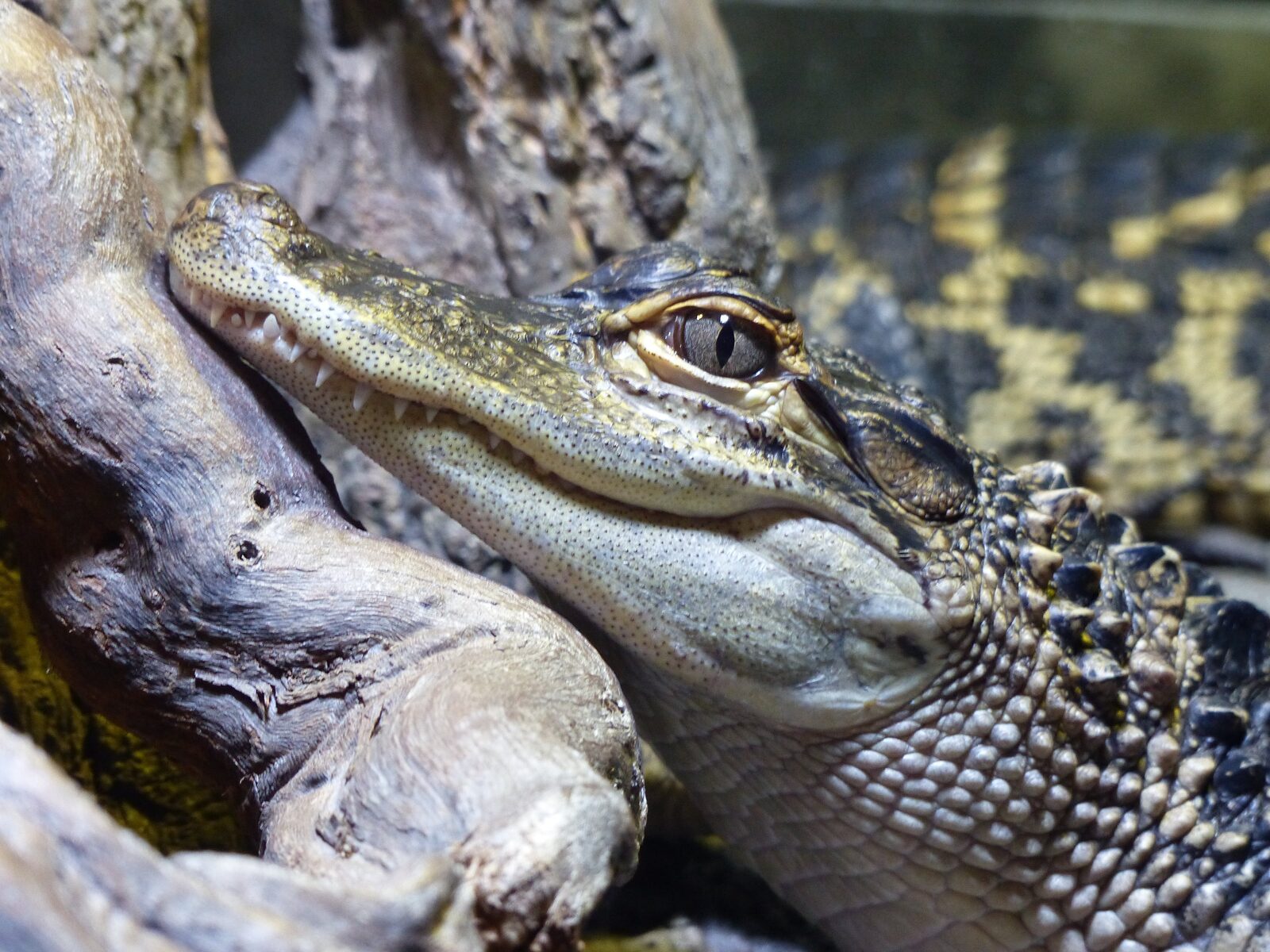
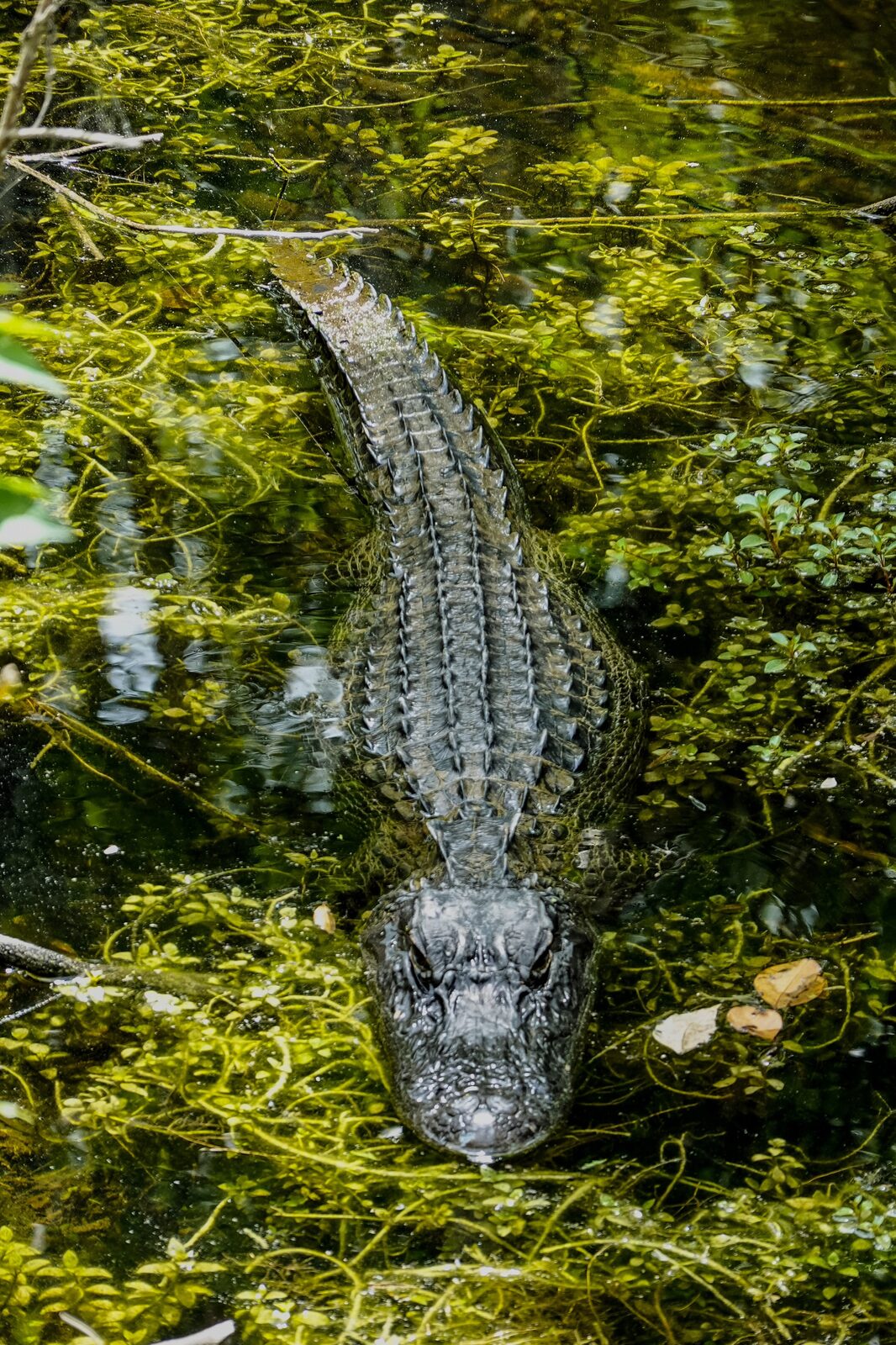
Alligators are ambush hunters. They can lie completely still for hours, drifting with the debris, waiting for something to make the mistake of coming close.
Everything from Exhibit 01 pays off here: eyes and nostrils on top of the skull so the animal can watch and breathe while submerged; a slowed heart rate that stretches one breath across an hour or more; and camouflage borrowed from algae and green water.
Then the waiting ends. The lunge is short, explosive and almost entirely powered by that tail.
They also adapt. Alligators have been observed adjusting tactics to the prey and the place — and there are records of animals apparently working together, with some blocking escape routes while others wait.
Game: Don’t Flinch
Click the water to start watching. The strike comes somewhere between two and six seconds later — click again the moment it does. Click early and you have given yourself away.
Click to start watching
Your reaction time is the gap between seeing the strike and moving. An alligator’s lunge is already underway during that gap — which is precisely why the advice is distance, not reflexes.
Grip, Then Roll
Alligator teeth are cones. They are superb at holding onto something slippery and completely useless for cutting. An alligator cannot chew.
Anything small goes down whole. Anything too big for that gets the death roll: the alligator clamps on and spins its whole body along its long axis, twisting a manageable piece free.
It looks like rage. It is actually the only tool available — a body-powered replacement for the cutting teeth the animal doesn't have.
And the famous asymmetry holds: the muscles that slam those jaws shut are extraordinary, while the ones that open them are weak enough that a determined pair of hands can keep an alligator's mouth closed. Handlers rely on it. Nobody should test it.
“I'd like to point out that the roll is not personal. I simply have no cutlery.”
The Slowest Engine in the Swamp
For all that machinery, an alligator barely runs. Its metabolism is remarkably slow — slow enough that one can survive up to two years without eating, though in practice they eat far more often than that.
It is the same trick as the breath-holding, applied to food: burn very little, and you need very little. A cold alligator is barely burning anything at all, which is why feeding activity drops away sharply in cool weather.
Put the ambush hunting and the slow metabolism together and you get an animal that can afford to wait. Not hunting is not failure. It is the plan.
Bars are illustrative of the contrast, not plotted on a shared scale.
The one rule that matters
Never feed a wild alligator. An alligator that learns to associate people with food loses its wariness — and a gator that has lost its wariness usually ends up destroyed. Feeding them is illegal in most states for exactly this reason.
- Keep well back — the standard guidance is at least 60 feet, about five car lengths.
- If you meet one, back away slowly. Do not run in a zig-zag, do not approach for a photograph.
- Keep small pets leashed and away from the water's edge, especially at dawn and dusk.
- Never swim in water posted for alligators, and never at night.
- Report a gator behaving boldly to your state wildlife agency rather than dealing with it yourself.
Exhibit complete
You know what goes in. Next: where a new alligator comes from, and the strangest fact in the whole park.