
Gator TalkThey are not the strong silent type.
Growls, hisses, grunts and a bellow you feel through the floor. Add head-slaps, jaw gapes and a working dominance hierarchy, and the "solitary primitive reptile" story falls apart quickly.
The Bellow
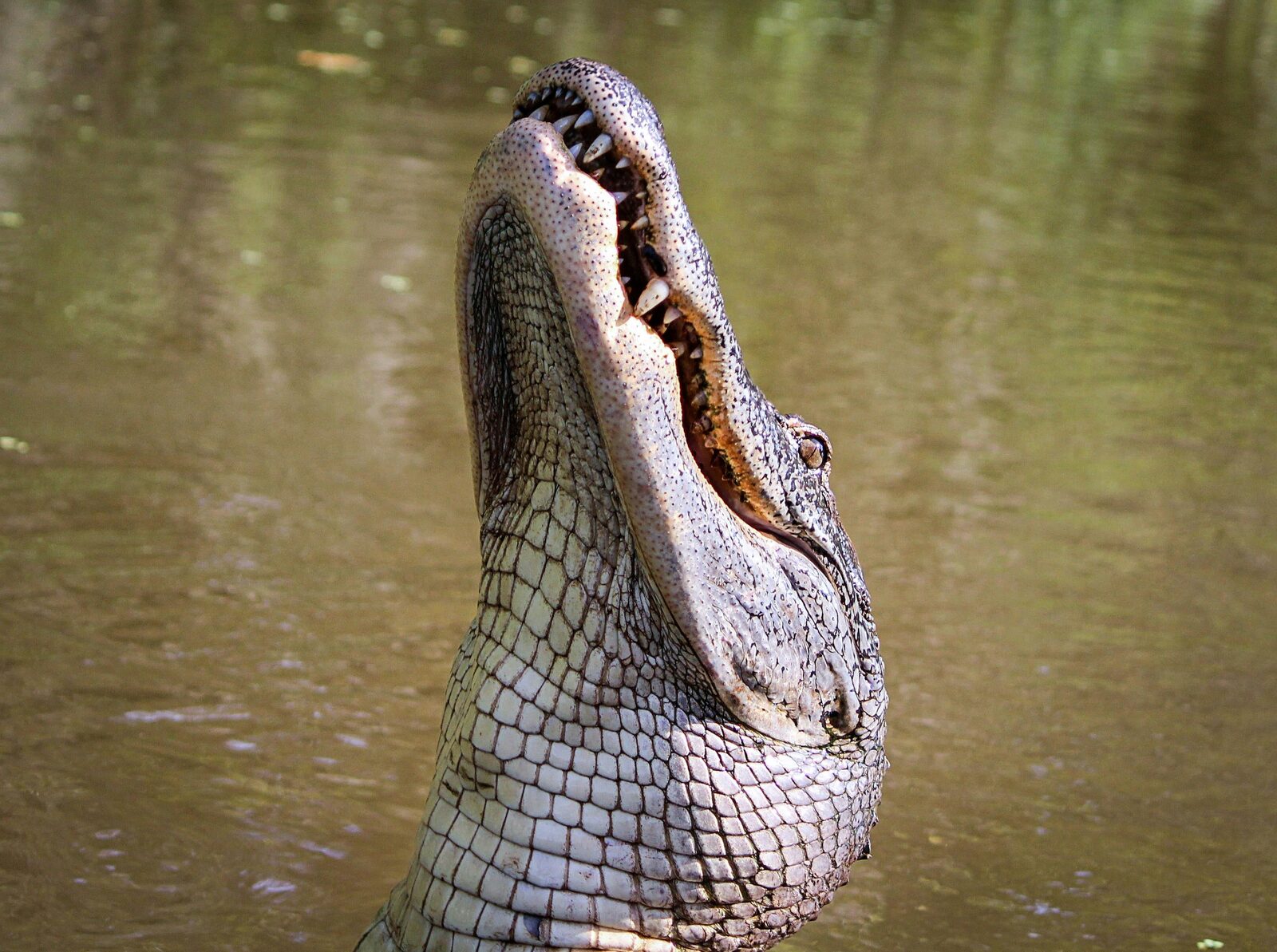
Alligators are surprisingly vocal. They growl, they hiss, they grunt, and they produce the deep rumbling call known as bellowing — used in the mating ritual and to announce presence to other alligators.
A bellow is not a shout so much as a low pressure wave. Bigger animals produce lower calls, which means the sound itself carries information about the size of whoever made it — useful if you would rather sort out a dispute without a fight.
Bellowing also spreads. One animal starts and others answer, until a stretch of water is having a full conversation.
Instrument: Make a Bellow
Synthesised live in your browser — no audio file. Set a body size and pull the trigger. Turn the volume down a little first.
Real bellows also carry an infrasonic component below the range of human hearing — low enough to make the water above the animal’s back visibly dance. Laptop speakers cannot reproduce that, and neither can this.
A stylised synthesis for demonstration, not a recording. Licence real field audio before launch if you want the genuine article.
Talking Without Sound
Plenty of alligator communication makes no noise at all. The vocabulary includes:
- Head-slapping or tail-slapping the water — a sharp percussive display that carries above and below the surface.
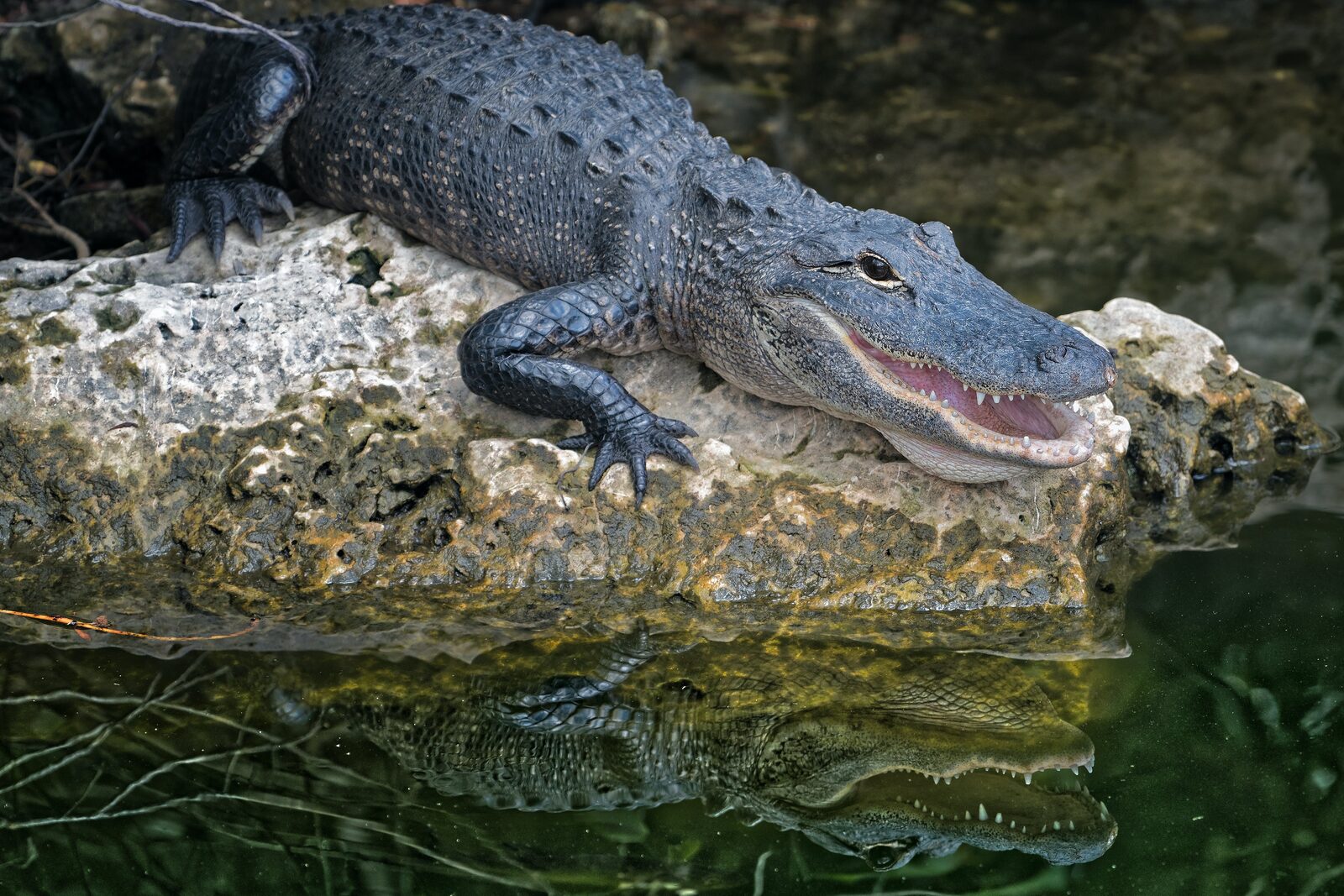
- Jaw gaping — holding the mouth wide open as a threat, and as a way of shedding heat.
- Arching the back to raise the body and look considerably larger than it is.
Most of this is about avoiding a fight rather than starting one. An animal that has clearly stated its size and its intentions usually does not have to prove them — which suits everybody, since a serious fight between two big alligators is expensive for both.
Game: Translate the Signal
Click a signal on the left, then the message it sends on the right. The right-hand column is shuffled every time.
The signal
The message
Who Gets the Warm Rock
Where space and resources are limited, alligators sort themselves into a dominance hierarchy. It is not subtle: the largest, most dominant animals get first call on the best basking spots and the best hunting ground, and everyone else works around them.
Males are territorial, especially in the breeding season, and will defend a patch through aggressive display, vocalisation, and physical confrontation if the display does not work.
Mostly it does work. Alligators generally avoid unnecessary conflict — the point of all that bellowing and posturing is to settle the question cheaply.
Crowds, Not Friendships
Alligators are often found in groups — a congregation. Dozens of animals basking on the same bank or drifting in the same pool.
It is tempting to read that as sociability. It is closer to tolerance. Congregations form where a resource is abundant enough to be worth sharing: a good sunning spot, plenty of food, warm shallow water. The animals put up with each other because the alternative is worse.
That said, the real social behaviour is elsewhere, and it is genuine. There are records of apparently cooperative hunting, with some animals cutting off escape routes while others wait. And the parental care covered in Exhibit 05 — a mother guarding her nest, opening it, carrying her young to water and defending the pod — is a level of investment you simply do not expect from a reptile.
Solitary primitive ambush machine is a much tidier story. It is also wrong.
“I have watched forty of them share one bank without a single argument, then watched two of them argue for an hour over a rock. There is no logic. There is only the rock.”
Exhibit complete
Next: what alligators are farmed for, and the uncomfortable reason it matters to conservation.