
Swamp Sweet SwampAn address, an engineering firm, and a comeback.
Alligators don't just live in wetlands. They build them, maintain them, and keep half the neighbourhood alive through the dry season.
The Address
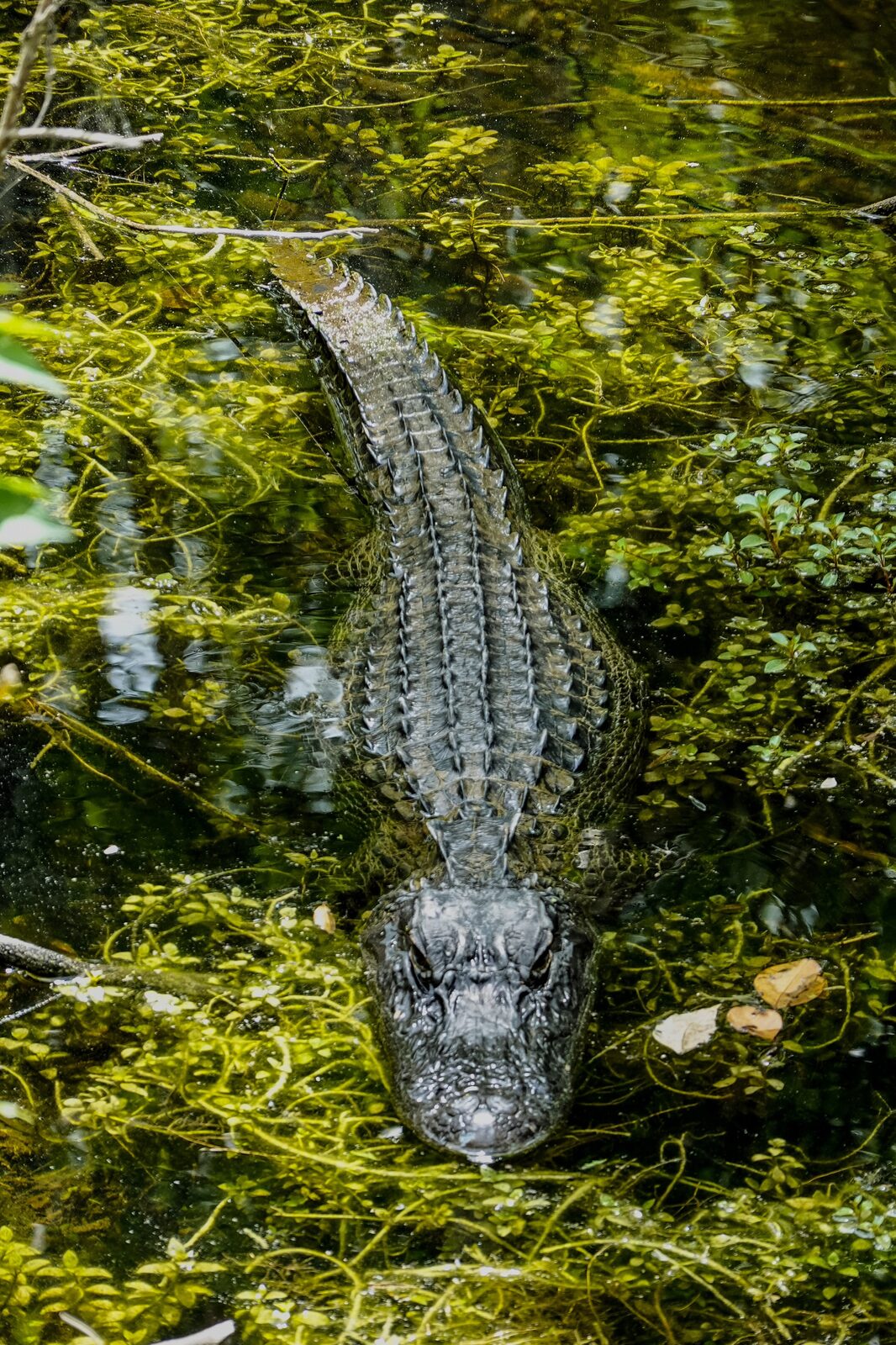
The American alligator lives across the south-eastern United States, in freshwater swamps, marshes, rivers, lakes and ponds. Its range reaches as far north as North Carolina and as far west as eastern Texas — but the centre of gravity is Louisiana and Florida, which between them hold the great majority of the population.
The Chinese alligator has a far narrower story: the Yangtze River basin in eastern China, in slow rivers, streams, lakes and swamps. Habitat loss, pollution and hunting have reduced it to a critically endangered remnant, propped up by captive breeding.
Both species are adaptable freshwater animals. The American one simply had more room and more help.
Figures from the project brief, which cites estimates current to 2023. Re-verify against FWC and Louisiana Department of Wildlife and Fisheries data before launch.
The Ecosystem Engineer
Alligators are apex predators, which means they hold the balance of everything below them in the food web. But their more surprising job title is keystone species and ecosystem engineer.
They dig. Clearing out depressions in the mud creates gator holes — pockets of standing water that persist when everything around them dries up. In a drought those holes become the last water for miles, and fish, turtles, wading birds, insects and amphibians all crowd into them.
Their nesting mounds do something similar, raising ground and creating micro-habitats other species colonise. Remove the alligator and you don't just lose a predator; you lose the plumbing.
“When the marsh dries out, that gator hole is the only water left. Yes, there's an alligator in it. You take your chances.”
What's Going Wrong
Development
Wetlands drained and built on. Habitat gets fragmented, water flow changes, and populations end up cut off from one another.
Pollution
Agricultural runoff, industrial waste and urban stormwater degrade water quality and thin out the food supply.
Climate change
Rising seas, shifting rainfall and heavier storms reshape low-lying coastal habitat — and warmer nests could skew the sex ratio of a whole generation.
Invasive species
Introduced animals compete for food and space and destabilise the food web. In south Florida, Burmese pythons are the headline example.
“I'm the invasive one, and I'd rather not be. Somebody let my great-grandparents go when they got too big for the tank. Please don't do that.”
And what's being done
Protected areas
Refuges and reserves that keep critical wetland out of the path of development.
Restoration
Re-opening water flow, removing pollutants, replanting native vegetation.
Managed harvest
Regulated hunting and farming that keeps populations healthy and gives landowners a reason to keep the marsh wet.
Research
Long-running monitoring of numbers, nests and habitat that tells managers what is actually happening.
Education
Getting people to understand the animal well enough to live alongside it. That's this website's job.
Community
Local involvement in stewardship, because wetlands that people value are wetlands that survive.
The Comeback
Through the 1950s and 60s, unregulated hunting for hides and the steady draining of wetlands drove the American alligator to the edge. In 1967 it was listed as endangered under a forerunner of the Endangered Species Act.
Legal protection cut off the illegal hide trade. Habitat conservation gave populations somewhere to recover. Alligator farming took commercial pressure off wild animals by supplying the market another way.
By the late 1980s the species was considered fully recovered and removed from the endangered list. The IUCN now lists it as Least Concern — though trade is still monitored under CITES, and one Mississippi population remains protected.
It is held up, routinely and fairly, as one of the most successful conservation efforts in American history.

Illustrative of the recovery trajectory, not a plot of survey data.
“My grandparents' generation nearly didn't make it. Laws, wetlands and a lot of stubborn people fixed that in about twenty years. Don't let anyone tell you conservation doesn't work.”
Exhibit complete
You know where they live and how close they came to vanishing. Next: what happens when something wanders too close to the water.